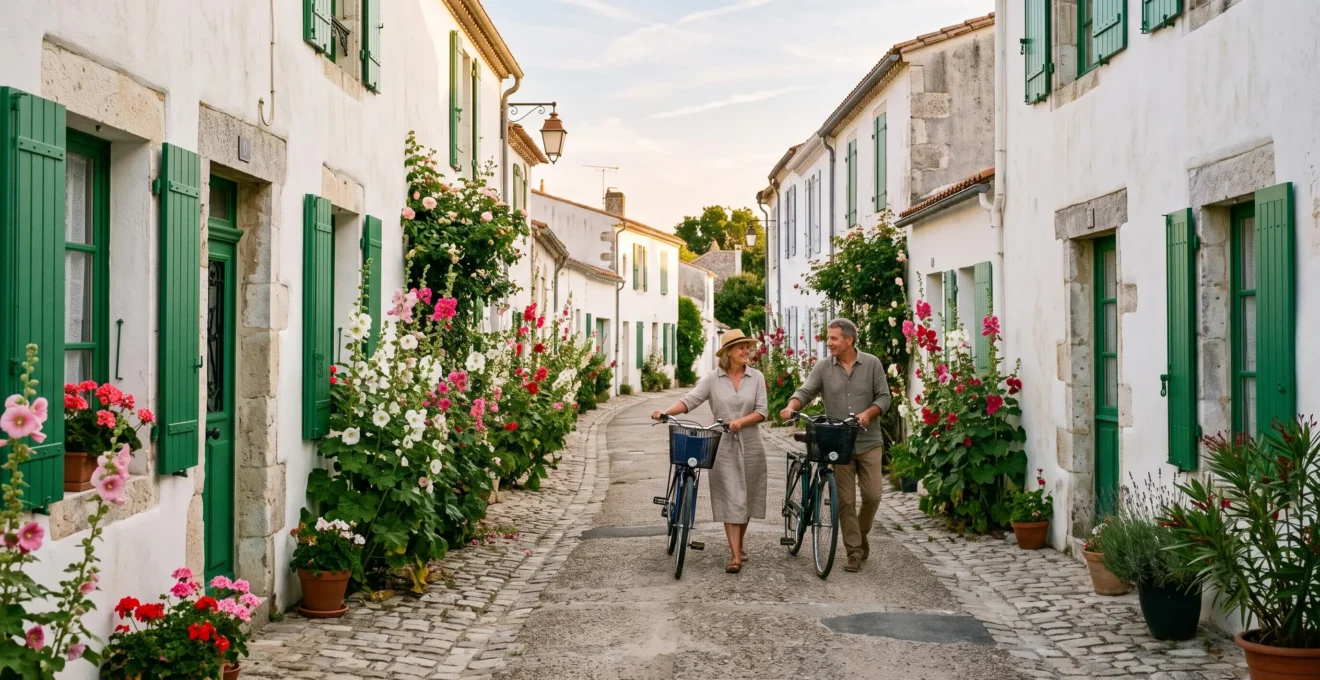
If you’re comparing villages on the Île de Ré for a luxury stay away from the crowds, Les Portes-en-Ré is often the one that stands out for the right reasons: a small-scale atmosphere, a discreet sense of refinement, and easy access to protected coastal landscapes.
Direct answer: choose Les Portes-en-Ré if your priority is a quiet, upscale escape shaped by nature (marshes, dunes, wide beaches) rather than nightlife or a “resort” feel. It can justify a higher budget when you value calm, privacy, and a slower pace—especially outside peak summer weeks.
Below, you’ll find a concrete comparison mindset (what you get here versus busier villages), plus practical guidance on where to stay, when to go, and how to arrive smoothly.
If you’re choosing a village on the Île de Ré, start here
- Go for Les Portes-en-Ré if you want discreet luxury, nature, and a quieter rhythm than the island’s most visited hubs.
- Target shoulder season (late spring or early autumn) for the best balance of atmosphere and breathing space.
- Pick accommodation by intent: boutique hotel/guesthouse for short stays; seasonal rental for longer, more private weeks.
- Plan logistics early in summer: access, parking strategy, and cycling routes matter more than on a city break.
What Makes Les Portes-en-Ré a Haven of Discreet Luxury?
Les Portes-en-Ré is a strong fit when your definition of luxury is space, quiet, and understatement rather than buzz. The local tourism office describes the village atmosphere as “calm and charming,” surrounded by preserved landscapes—useful context when you’re trying to avoid a destination that feels like mass tourism.
Compared with more animated villages on the Île de Ré (for example, areas that concentrate shops, events, and visitor flows in summer), Les Portes-en-Ré tends to feel more residential and nature-oriented. That doesn’t mean it’s “empty” in high season—no coastal island is—but the experience is typically framed around beaches, cycling, and open horizons rather than crowds and nightlife.
If you’re wondering “is Les Portes-en-Ré worth the price?”, the most honest way to decide is to compare what you’re paying for. Here, the premium is often linked to a calmer setting and a more exclusive feel (limited scale, discreet addresses, proximity to wild coastal spaces), not to flashy attractions.
For a quick official snapshot of the village positioning and atmosphere, start with the description officielle du village calme from Destination Île de Ré (the intercommunal tourism office).
How to compare villages quickly: use calm as a measurable criterion. Ask yourself where you’ll spend most of your time—terraces and shopping streets, or dunes and cycling paths—and choose the village that matches that daily rhythm.
| Decision criterion | Les Portes-en-Ré | Busier island villages (general profile) |
|---|---|---|
| Overall vibe | Discreet, nature-led, calm-seeking friendly | More animated, more footfall in central areas (especially in summer) |
| Best for | Couples and travellers prioritising quiet, landscapes, cycling | Travellers who want more activity “on the doorstep” |
| Trade-off to expect | Fewer “big town” options; planning matters in peak season | More choices nearby, but a higher chance of a crowded feel |
Hypothetical contrast scenario: in a busy August week, a village with a concentrated harbour/central shopping spine can feel lively all day; in Les Portes-en-Ré, your day is more likely to be structured around a quiet breakfast, a bike ride through open landscapes, and long beach time—while accepting that popular spots still fill up during peak holiday periods.
Nature, Beaches and Unspoiled Landscapes
The calm of Les Portes-en-Ré is closely tied to its surroundings: marshes, dunes, cycling paths, and broad coastal horizons. Even when the island is busy, nature-heavy areas change the sensation of crowding—you can often “dilute” your day by moving through open spaces instead of staying in a dense centre.
When planning, think in textures and distances: salt marsh edges, sandy tracks, pine-lined stretches, and long beach walks. This is where the village can feel like a peaceful luxury escape—not because it’s isolated, but because the landscape invites slower days.
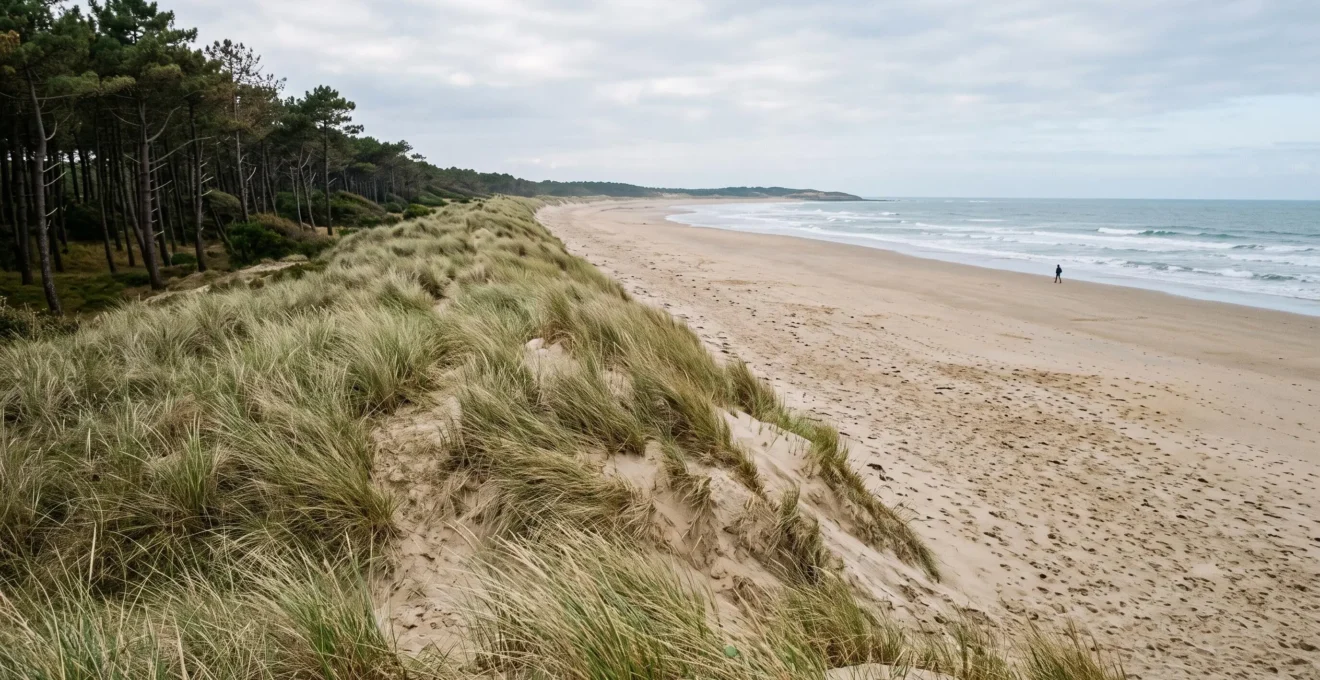
A low-season morning (example): start early with a walk or cycle along the marshes, then head to the coast while the beaches are still quiet. You’ll notice how the island’s energy shifts outside peak hours: fewer cars, softer soundscapes, and more room to settle into your own pace.
If protected nature is central to your choice, verify access rules and sensitive zones before you go (paths, seasonal protections, cycling directions). These can change, and they matter for both tranquillity and respect of the environment.
A quick reality check for summer : even the quietest-feeling areas can get busier in July–August, especially late morning to late afternoon. Plan earlier beach time and keep evenings for village life.
Where to Stay: Charming Accommodation in Les Portes-en-Ré
For a calm, upscale trip, the “best” accommodation is the one that protects your time and your privacy. In Les Portes-en-Ré, that usually means choosing between boutique hotels/guesthouses (for effortless comfort and a short stay) and seasonal rentals (for space, independence, and a longer reset).
Boutique hotels and guesthouses: when does it make sense?
Pick a boutique hotel or a small guesthouse if you want the stay to feel light: fewer decisions, easier mornings, and a more intimate atmosphere. For a couple’s long weekend, that simplicity often “adds” luxury more effectively than extra square metres.
If you want to refine your criteria (what makes a place feel boutique rather than standard), this overview on boutique hotels can help you compare styles and experiences.
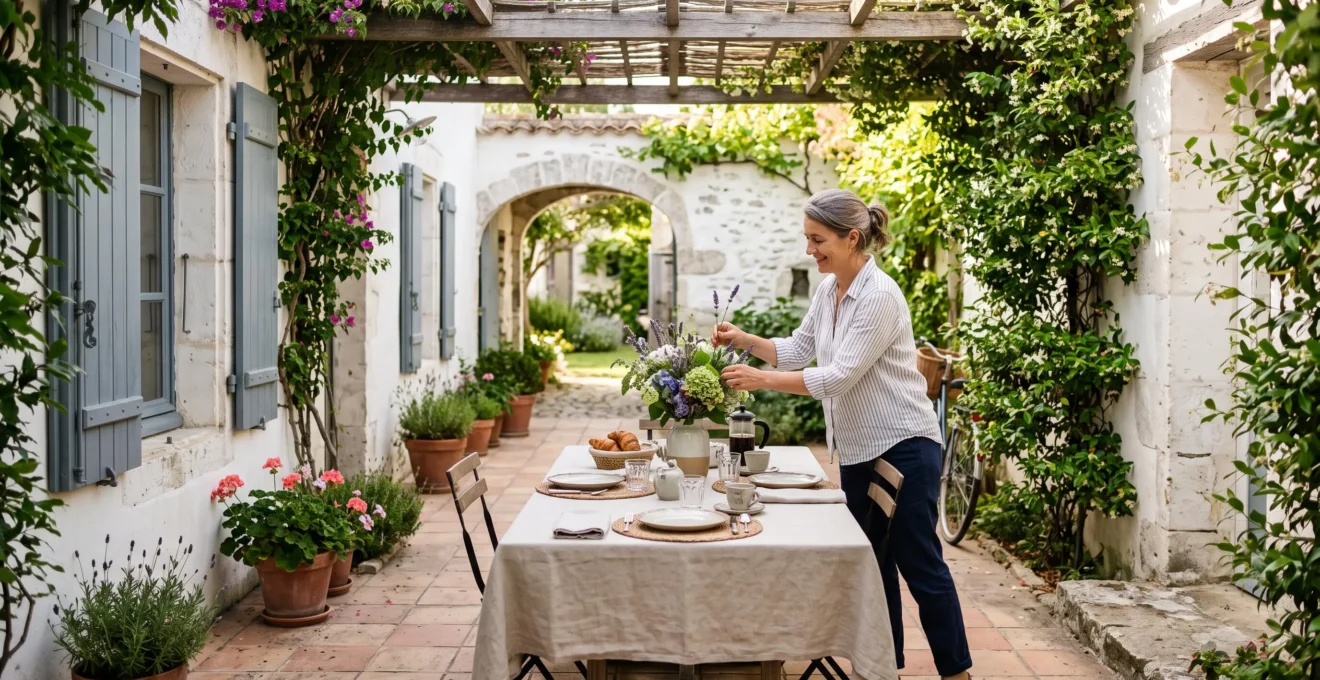
Seasonal rentals: how to keep it quiet (and not just “nice”)
A rental can be the most peaceful option if you choose location carefully. Look beyond aesthetics: a beautiful house near a high-traffic axis can feel less restful than a simpler one with a calmer micro-location. Ask about immediate surroundings (parking pressure, proximity to a busy beach access, late-evening noise) and prioritise walkability to what you’ll do daily.
Because we don’t have a verified, up-to-date source here for typical booking lead times, treat this as a planning principle rather than a rule: if you’re travelling in peak summer, start your accommodation search early and shortlist options that clearly match your calm-first priorities.
Decision example (hypothetical): for a 3-night couple escape, a guesthouse reduces friction and keeps the stay feeling “special.” For a 7-night family week, a rental often wins for space and routines—if you can secure a quiet setting.
What can justify premium pricing? In a village like Les Portes-en-Ré, the extra spend is often linked to the combination of setting (peaceful surroundings), comfort level, and how “protected” your time feels (less commuting, less noise, more ease). If you’re not getting those, the price may not align with your goal.
Planning Your Escape: When to Go and How to Get There
If your main fear is summer overcrowding, dates matter as much as the village choice. The simplest strategy is to aim for shoulder season (late spring or early autumn), when the island’s rhythm is typically calmer and you can enjoy long outdoor days without the same density of visitors.
When is the best time to visit without the summer crowds?
For many travellers seeking calm, May–June and September are the sweet spot: you keep the coastal feeling and outdoor lifestyle while reducing the chance of a “peak holiday” atmosphere. If you must travel in July–August, focus on structure: early beach time, cycling instead of driving when possible, and reservations for key meals.
We do not have a recent, official dataset in the provided sources to quantify peak vs shoulder-season crowd levels. For a decision that depends on that, cross-check current guidance on the intercommunal tourism office site before booking transport and accommodation.
How do you get to Les Portes-en-Ré easily?
Most routes combine a train to La Rochelle and then road access onto the island via the bridge. Once on the Île de Ré, a car can be practical for arrival day and luggage, but cycling is often the most relaxing way to experience short distances and avoid parking stress in busy periods.
Bridge budget (verified) : Le péage du pont de l’Île de Ré varie selon la saison : 4€ en basse saison, 8€ en moyenne saison et 16€ en haute saison pour un véhicule léger, selon le Département de la Charente-Maritime.
To confirm the current toll grid and categories, consult the tarifs officiels du pont de l’Île de Ré published by the Département de la Charente-Maritime (noting it states a 2026 grid).
Practical tip: in peak periods, decide your parking strategy before you arrive (accommodation parking, nearby public options, and whether you can “park once” and switch to bikes). This single choice often defines how calm your stay feels day to day.
How to Make the Most of Your Peaceful Luxury Stay?
The luxury in Les Portes-en-Ré is easiest to feel when you lean into slow experiences rather than trying to “cover” the whole island. Think: a market morning without rushing, long beach time at off-peak hours, cycling through open landscapes, and simple sunset moments.
What should a calm, high-end day look like here?
Sample peaceful day (example): start with a quiet breakfast, then cycle out through marsh and dune landscapes while the air is still cool. Keep midday for the beach (or a slower lunch), then return to the village for a golden-hour terrace moment before dinner.
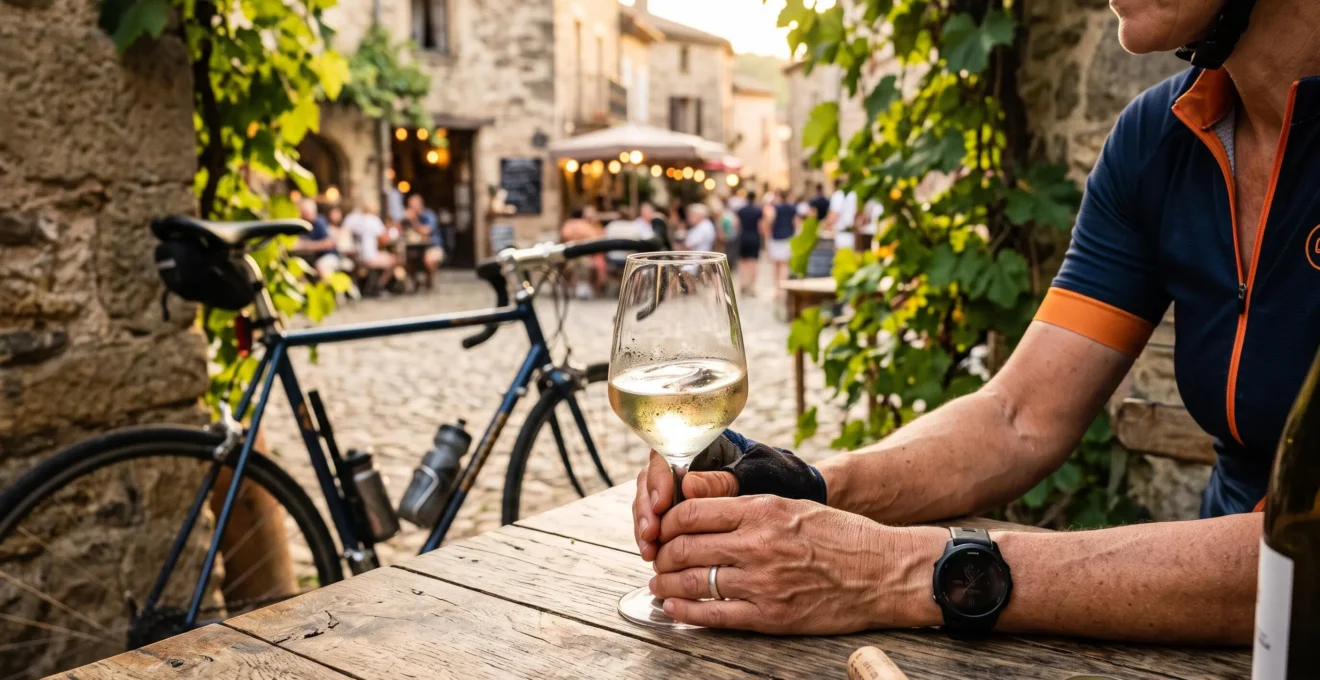
If your goal is truly a peaceful luxury escape, protect your schedule from over-planning. Choose one “anchor” per day (a beach, a ride, a long lunch), then let the rest be flexible—this is often what makes Les Portes-en-Ré feel worth the budget compared with more animated villages.
Bottom line for choosing villages: if you want the Île de Ré at its most restorative—discreet, nature-forward, and calm-first—Les Portes-en-Ré is a coherent choice. If you know you’ll want constant activity at your doorstep in peak summer, a busier village may fit better, even if it’s less quiet.
How does Les Portes-en-Ré compare to the busier villages on the island?
It typically feels more nature-led and discreet: fewer “resort” signals, more time spent on beaches, dunes, and cycling routes. In peak summer, it can still be busy, but the open landscapes often make the experience feel less dense than in villages with a concentrated centre.
Where should I stay in Les Portes-en-Ré for a calm, upscale trip?
For short stays, a boutique hotel or guesthouse often maximises calm by simplifying logistics and keeping the atmosphere intimate. For longer stays, a seasonal rental can offer more privacy—provided you choose a genuinely quiet micro-location (not just a beautiful interior).
When is the best time to visit without the summer crowds?
Shoulder season (late spring or early autumn) is usually the best balance for calm and comfort. We don’t have a recent, official crowd dataset in the provided sources, so check current local guidance if your decision depends on expected visitor levels.
Is Les Portes-en-Ré worth the price for a high-end, peaceful escape?
It can be—if what you’re paying for is aligned with your priorities: quiet surroundings, easy access to preserved landscapes, and an understated feel. If your trip will revolve around nightlife, dense shopping areas, or lots of scheduled activities, the premium may be less meaningful.
What should I plan in advance to keep the trip stress-free?
In peak season, plan accommodation and your parking/cycling strategy early, then keep daily schedules light. The most “luxurious” outcome here is often having time and space, not stacking activities.